
The reference station lives inside your GreenBeam Garage. Nothing to install, nothing buried in the lawn, and nothing to subscribe to.
IncludedGREENBEAM TECHNOLOGY
The intelligence behind every move.
Computer vision, onboard AI, precise positioning, environmental sensing, autonomous mobility, and precision treatment work together inside GreenBeam.
GreenBeam combines computer vision, edge AI, RTK positioning, LiDAR, virtual boundaries, all-wheel drive, onboard environmental sensing, and precision light treatment in one autonomous weed-control robot.
THE INTELLIGENCE INSIDE GREENBEAM
See what makes GreenBeam work.
CLICK OR TAP TO EXPLORE
INSIDE GREENBEAM
Integrated autonomy stack
SYSTEM OVERVIEW


JETSON
GPU
AI
SENSE
LiDAR + camera
DECIDE
Jetson AI
ACT
Laser + AWD
See → Understand → Decide → Locate → Move → Target
SENSE
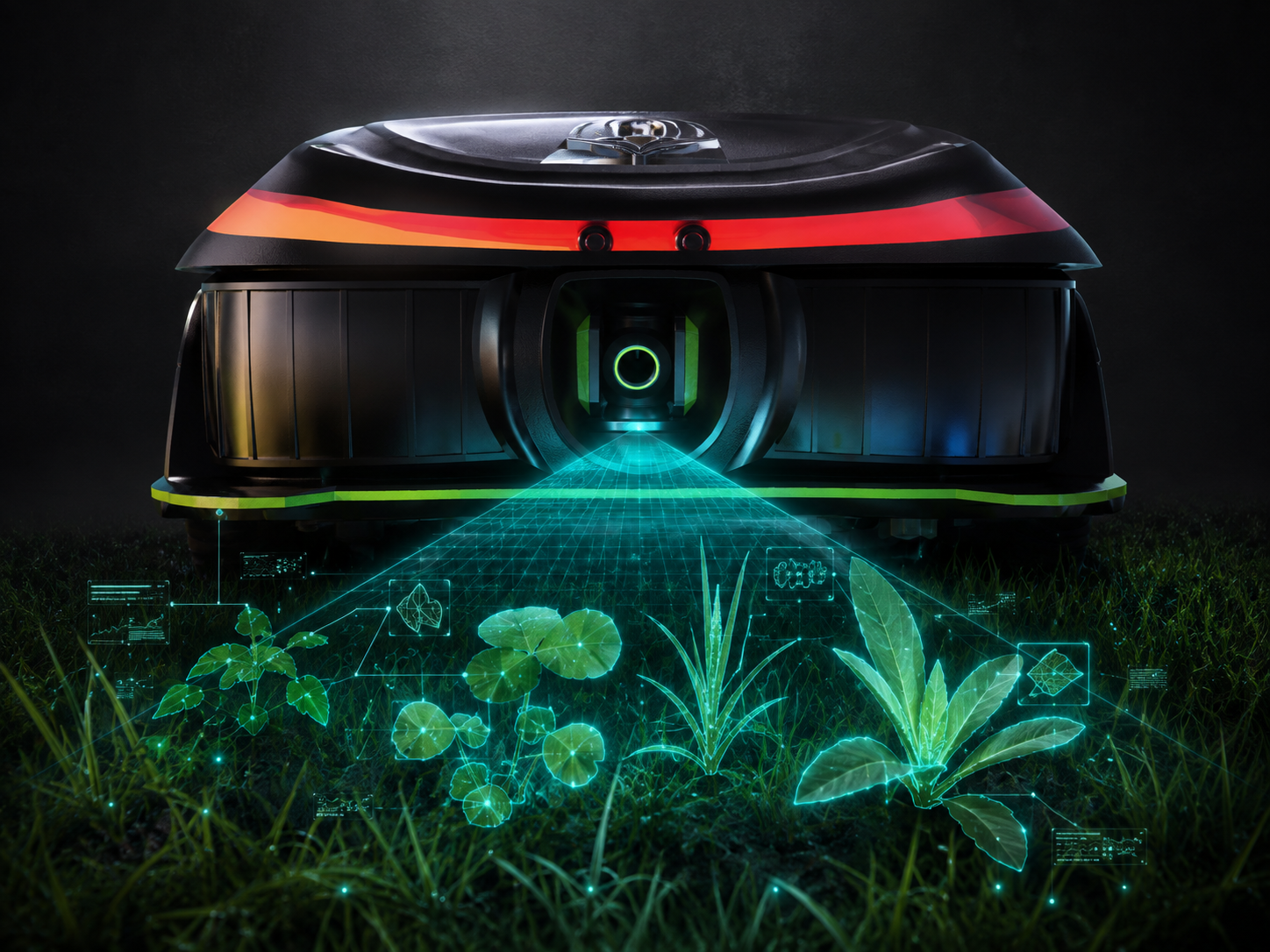
The lawn becomes information.
GreenBeam's onboard camera continuously scans the plants it encounters as it patrols. Every pass over the lawn generates visual data — leaf shapes, textures, color patterns — that the AI system evaluates in real time.
Camera-based plant scanning is the first step in GreenBeam's decision loop. What the camera sees becomes the input for everything that follows.
UNDERSTAND
AI onboard.
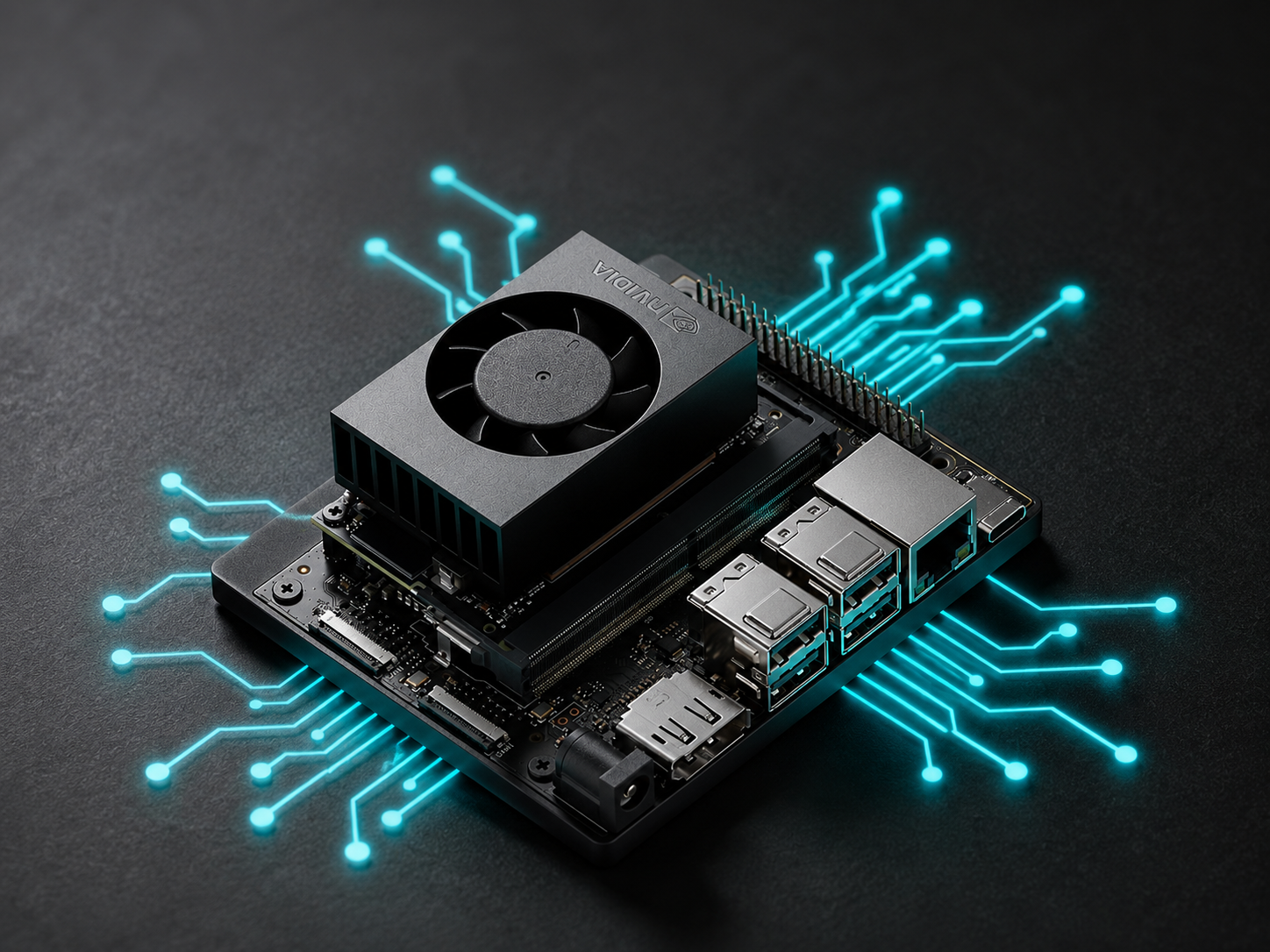
GreenBeam's AI runs entirely on the robot. Powered by the NVIDIA Jetson Orin Nano, plant recognition and weed identification happen onboard — without sending data to the cloud.
Edge AI means the robot can evaluate plants, make decisions and act on them in real time — even without a network connection. The Jetson Orin Nano brings the computing power needed for outdoor AI inference to a compact, power-efficient robotics platform.
NVIDIA JETSON ORIN NANO · ONBOARD COMPUTING · EDGE AI
DECIDE
Knowing what not to target matters too.
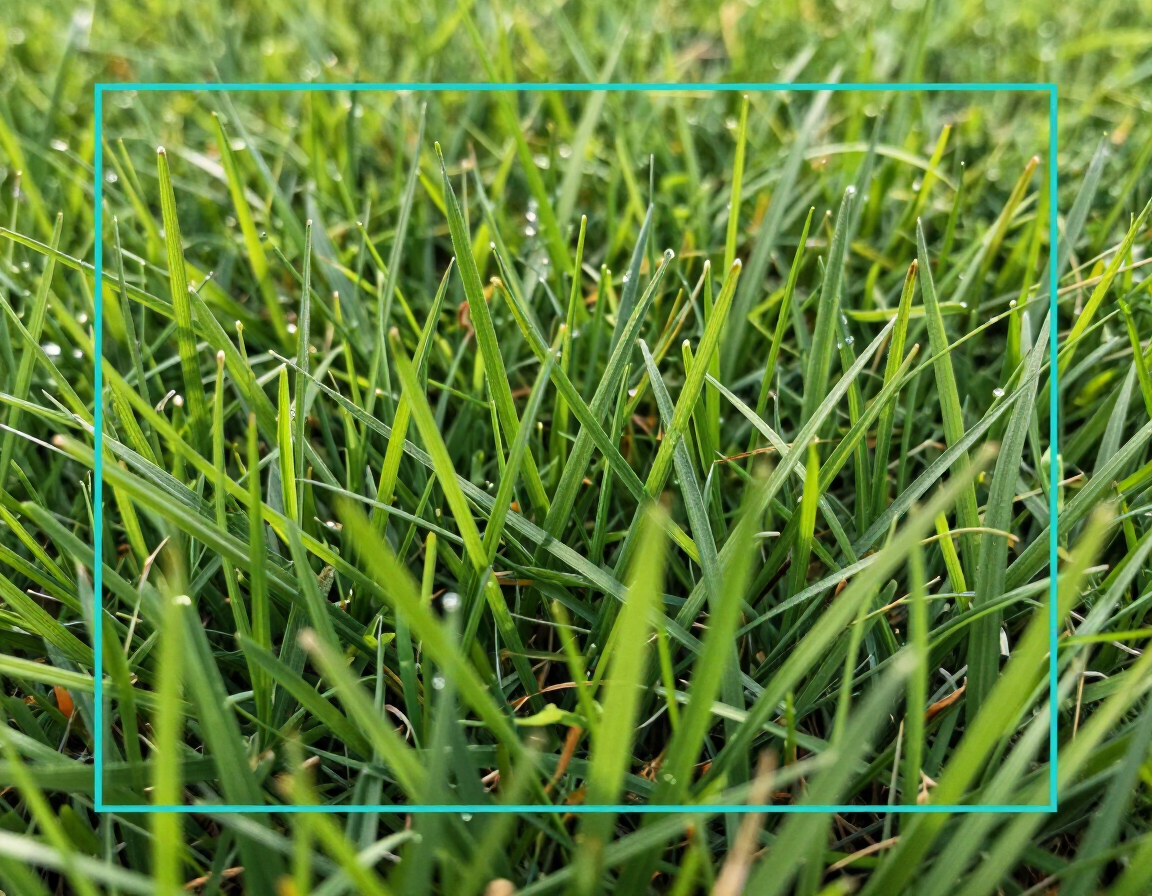
GreenBeam evaluates every plant it encounters. When the AI determines a plant is not a target weed, GreenBeam moves on. Grass, flowers, and groundcover are left untreated when they are not identified as a target weed.
GRASS
LEAVE

FLOWER
LEAVE

GROUNDCOVER
LEAVE

TARGET WEED
TARGET CONFIRMED
Plant discrimination is not a secondary feature. It is a foundational requirement for a system that treats individual plants.
LOCATE
Location at lawn scale.
RTK — Real-Time Kinematic positioning — gives GreenBeam centimeter-level positioning capability. This precision enables GreenBeam to maintain systematic coverage across the defined lawn area, know exactly where it has been, and navigate its operating zone accurately.
RTK works by combining standard GPS satellite signals with correction data from a ground-based reference point, resolving position errors down to the centimeter scale. For a robot making individual plant-level decisions, knowing exactly where it stands matters.
RTK POSITIONING · CENTIMETER-LEVEL CAPABILITY · SYSTEMATIC COVERAGE
![[ANIMATION — RTK coverage path over an overhead residential lawn map]](https://irp.cdn-website.com/182af01a/dms3rep/multi/opt/Locate-RTK-1920w.png)
Positioning, wherever it works
One property, a whole campus, or a different address every day.
RTK positioning needs a fixed reference to correct against. Where that reference lives depends on how GreenBeam is being used, and all three arrangements run the same hardware.
Worth knowing
GreenBeam aims with its camera, not with satellites. Positioning tells it where it is on your property and where it has already been. The targeting itself happens at the plant, in front of the plant.
A single reference station covers an entire property and serves every GreenBeam working on it. Ten robots, one reference, one mount with clear sky view.
CommercialFor crews working a different address every day, GreenBeam takes its corrections over the cellular network instead. No hardware at any property.
FleetLOCATE + SENSE
Spatial awareness in motion.
LiDAR gives GreenBeam a continuous three-dimensional awareness of its immediate surroundings. As GreenBeam moves, LiDAR maps obstacles, surface variations and the geometry of the space around it in real time.
![[ANIMATION — LiDAR point cloud of GreenBeam approaching a garden bed edge]](https://irp.cdn-website.com/182af01a/dms3rep/multi/opt/RTK-1920w.png)
LiDAR obstacle detection contributes to GreenBeam's environmental awareness as it navigates. Combined with RTK positioning and the GreenBeam App's virtual boundaries, GreenBeam understands where it is, where it is going, and what is in the way.
RTK = where am I? LiDAR = what's around me?
LiDAR · OBSTACLE DETECTION · SPATIAL AWARENESS
04 · Position + Awareness
Why RTK + LiDAR?
Knowing where you are is not the same as knowing what is around you. GreenBeam uses precise global positioning and immediate spatial awareness for two different jobs.
RTK
WHERE AM I?
GB
RTK provides centimeter-level positioning capability under appropriate operating conditions, helping GreenBeam remain oriented inside a mapped operating area.
LiDAR
WHAT'S AROUND ME?
GB
LiDAR contributes immediate spatial information about obstacles and surrounding geometry as the robot moves.
TOGETHER
Where can I move next?
Position and perception reinforce each other throughout the mission.
06 / Bound
Know where to work, and where not to.
GreenBeam's operating area is defined digitally through the GreenBeam App, with no buried perimeter wire. Draw the perimeter on the map, include the turf and the planting beds you want treated, and set exclusions around anything you want left alone.
Virtual boundaries are precise, adjustable and invisible. Change them any time from your phone. No digging, no reinstallation, nothing dug into the lawn.
- Turf zones. The open lawn, treated on its own schedule.
- Bed zones. Planting beds and borders are included, not excluded. This is where most hand weeding happens.
- Exclusions. The pool, the patio, the vegetable garden, the play set. Anywhere GreenBeam should never enter.
No boundary wire. No installation. No physical changes to the lawn.
Turf and beds included · pool excluded
MOVE
Power at every wheel.
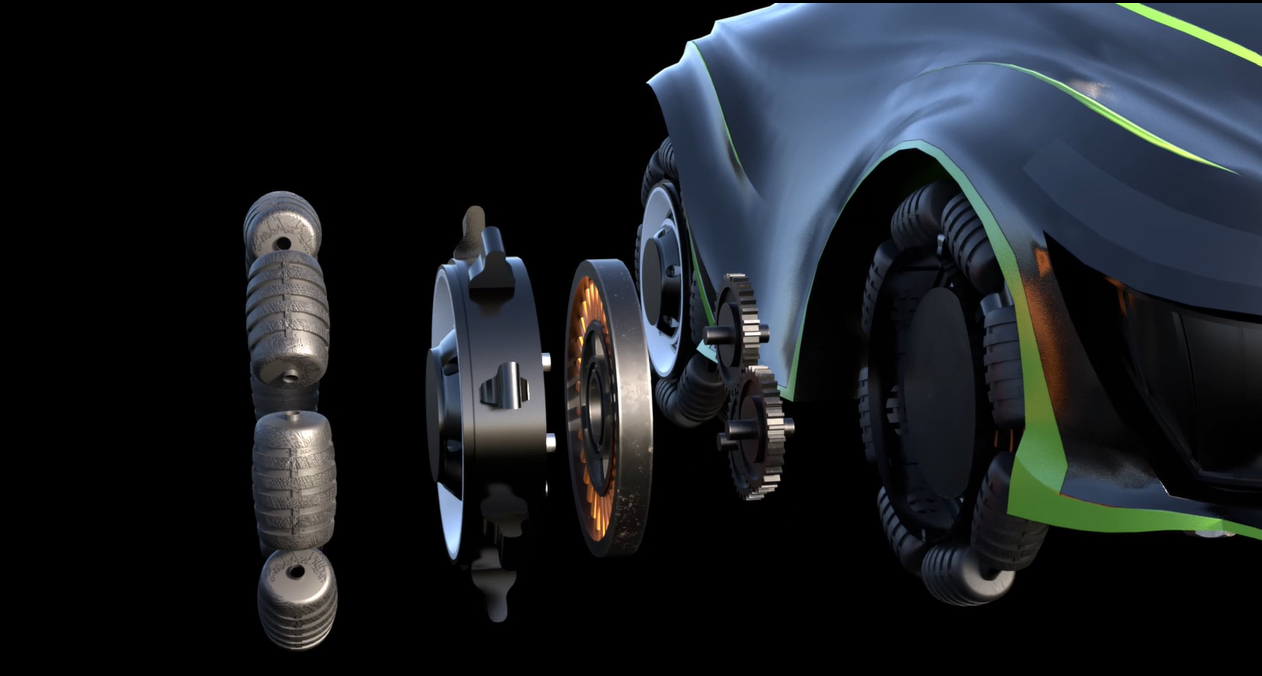
GreenBeam uses all-wheel drive with in-wheel motors — a motor at each wheel rather than a central drive shaft. This architecture delivers independent power and control at every wheel simultaneously.
Real lawns are not flat. AWD with in-wheel motors supports GreenBeam's mobility across uneven ground, surface variations and slope — the kinds of conditions that defeat simpler drive systems.
ALL-WHEEL DRIVE · IN-WHEEL MOTORS · FOUR-WHEEL INDEPENDENT DRIVE
TARGET
The final decision happens at one plant.
GreenBeam's entire system — computer vision, onboard AI, RTK positioning, LiDAR awareness, autonomous mobility — converges at this point. One weed. One treatment. Precision light directed at the weed's growth point.
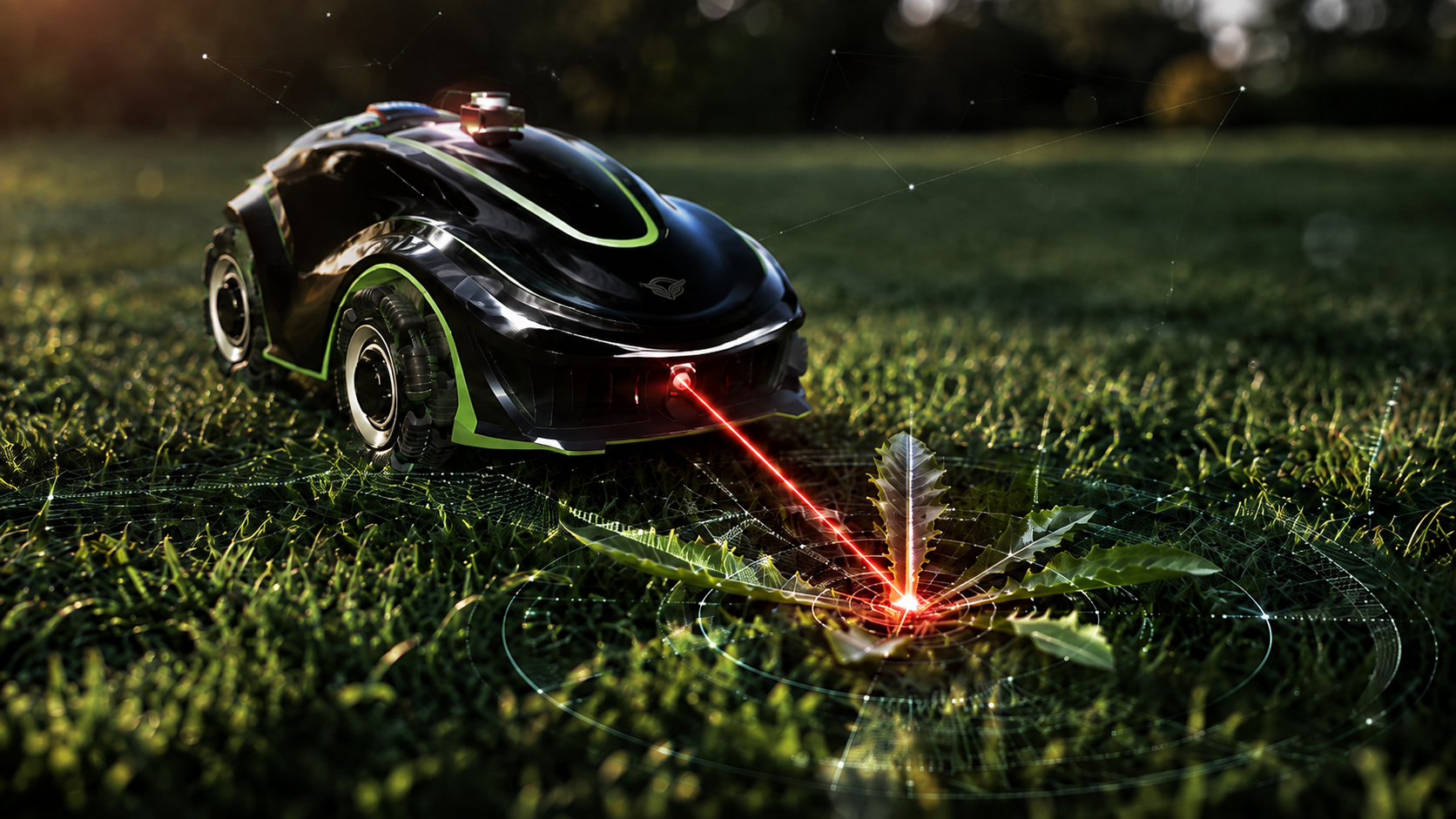
GreenBeam directs precision light at the growth point — the meristem — the part of the plant responsible for growth. Targeting at this level, rather than treating the surrounding lawn area, is the core principle of autonomous precision weed control.
TARGET CONFIRMED
See → Understand → Decide → Locate → Move → Target
OUTDOOR INTELLIGENCE
Outdoor intelligence includes knowing when conditions change.
GreenBeam operates outdoors, which means operating conditions change. When GreenBeam detects rain, it executes an automatic behavioral sequence — no app input required.
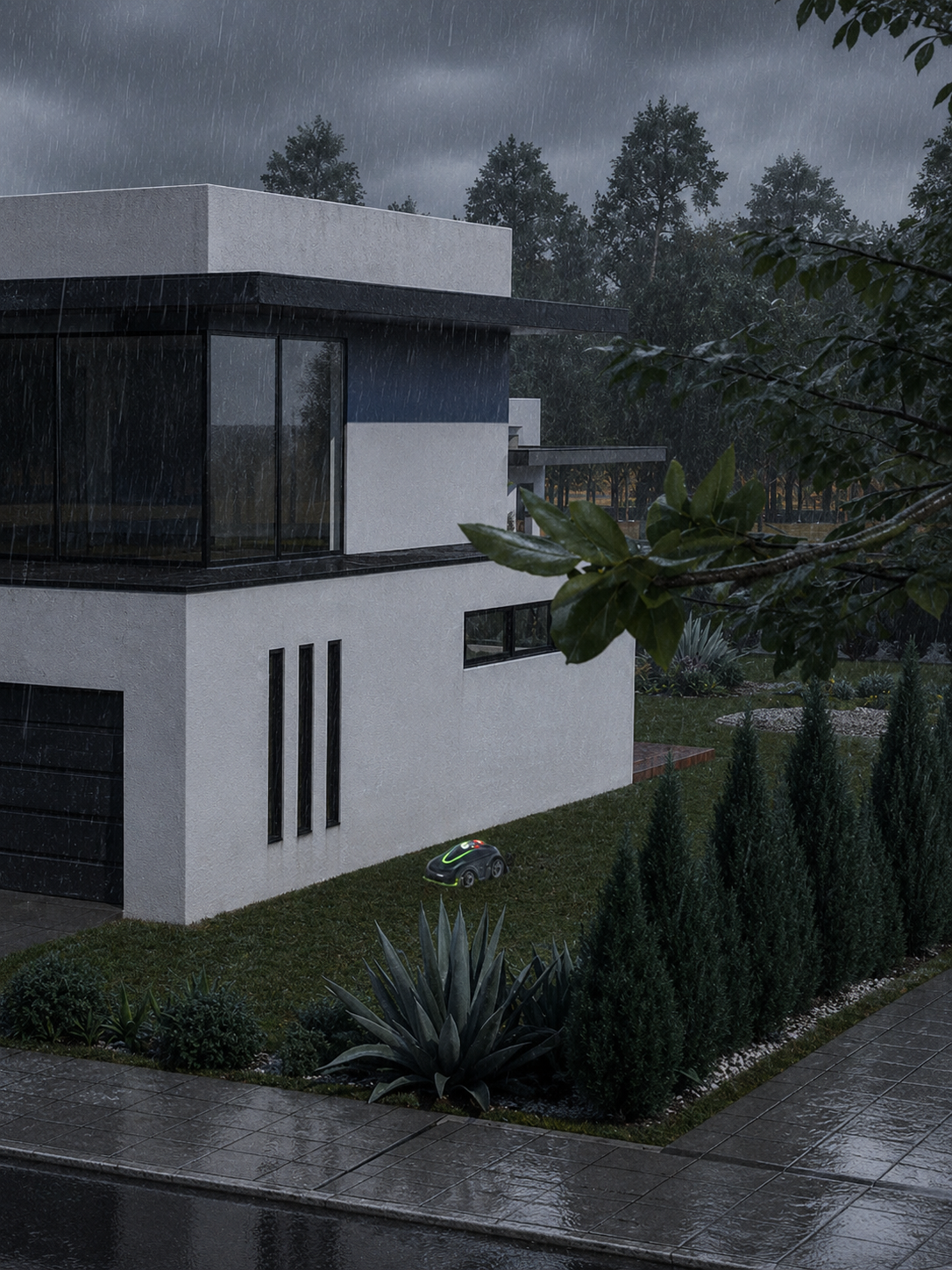
RAIN DETECTED
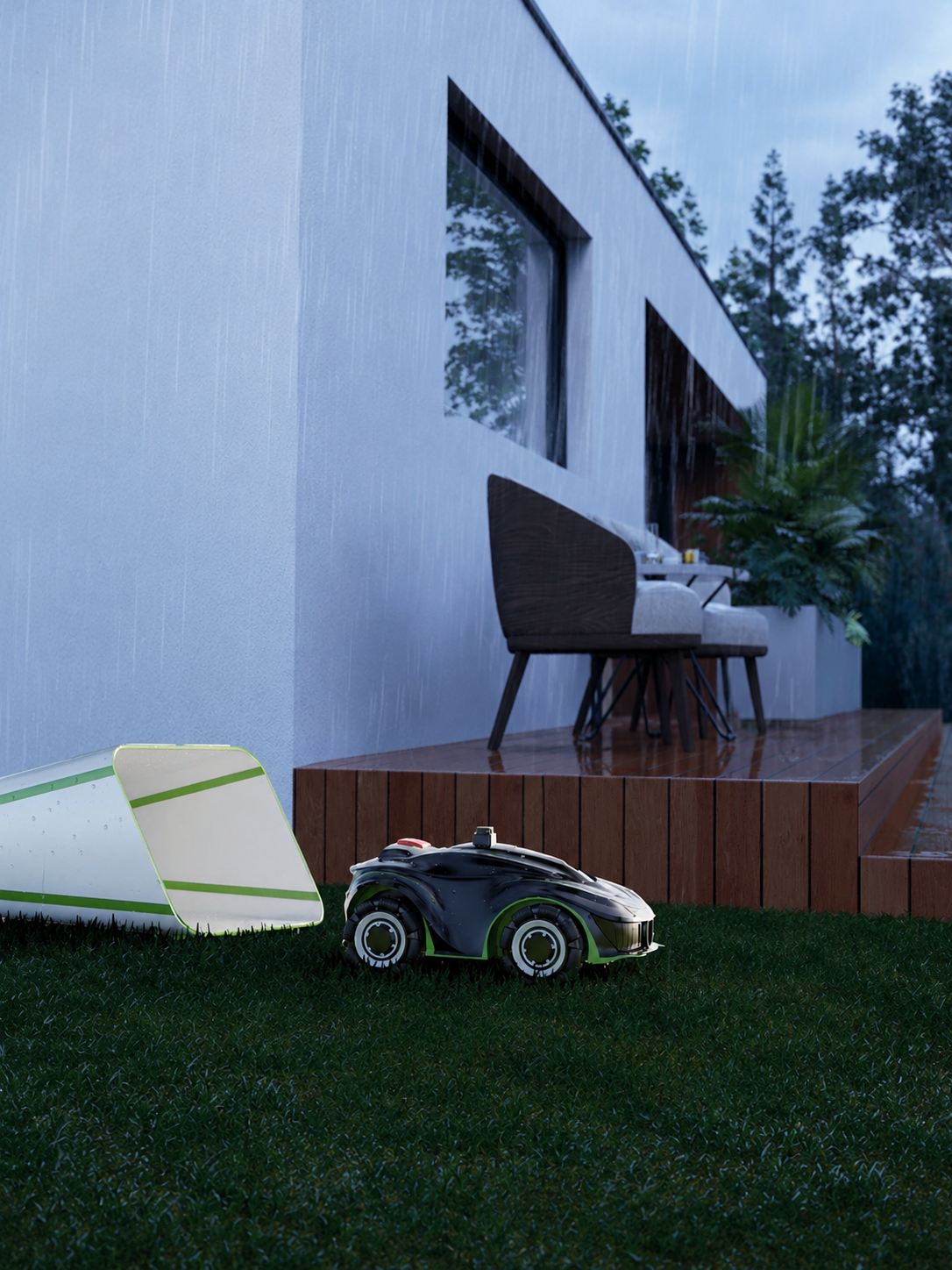
RETURNING HOME
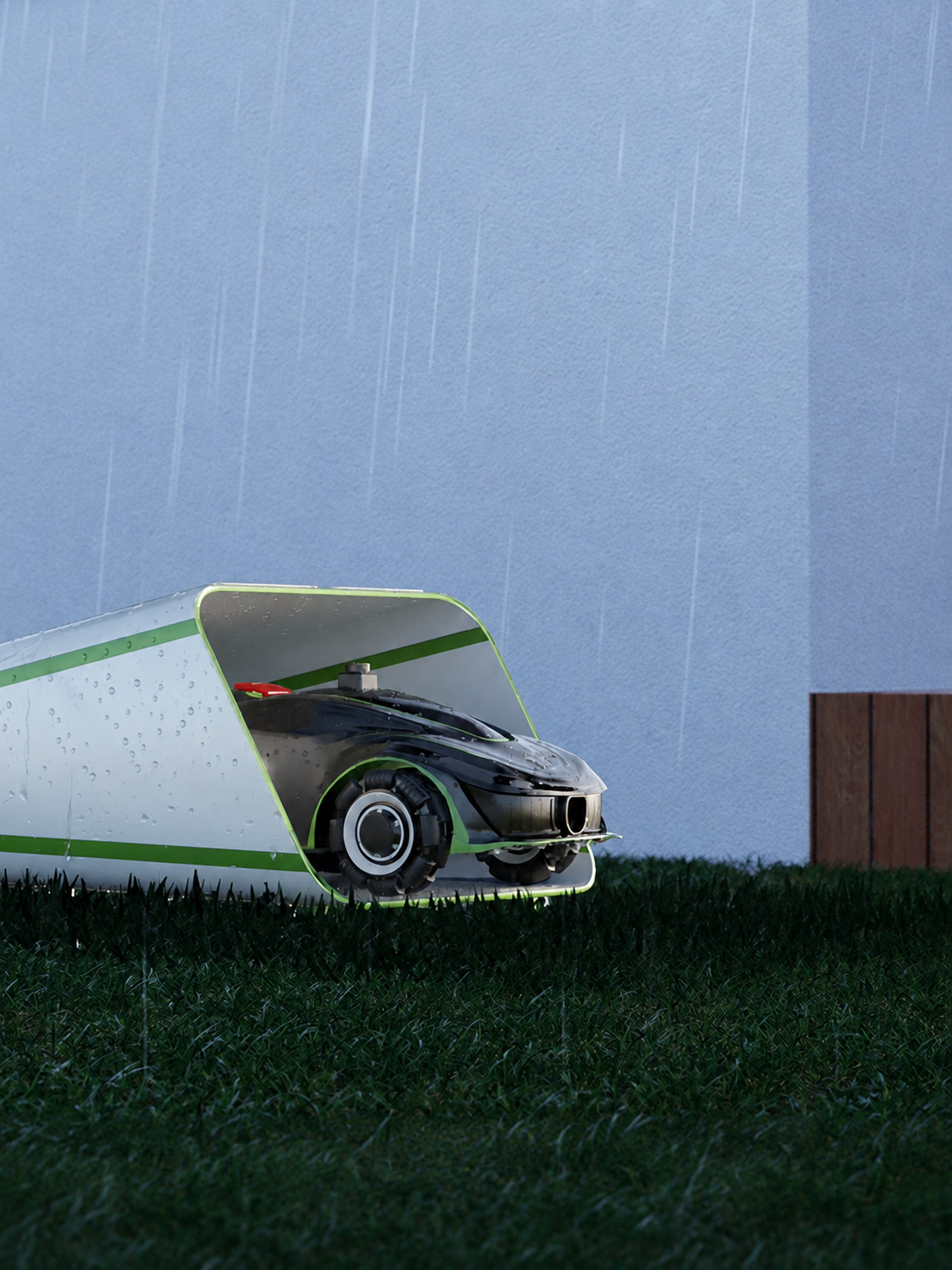
DOCKING
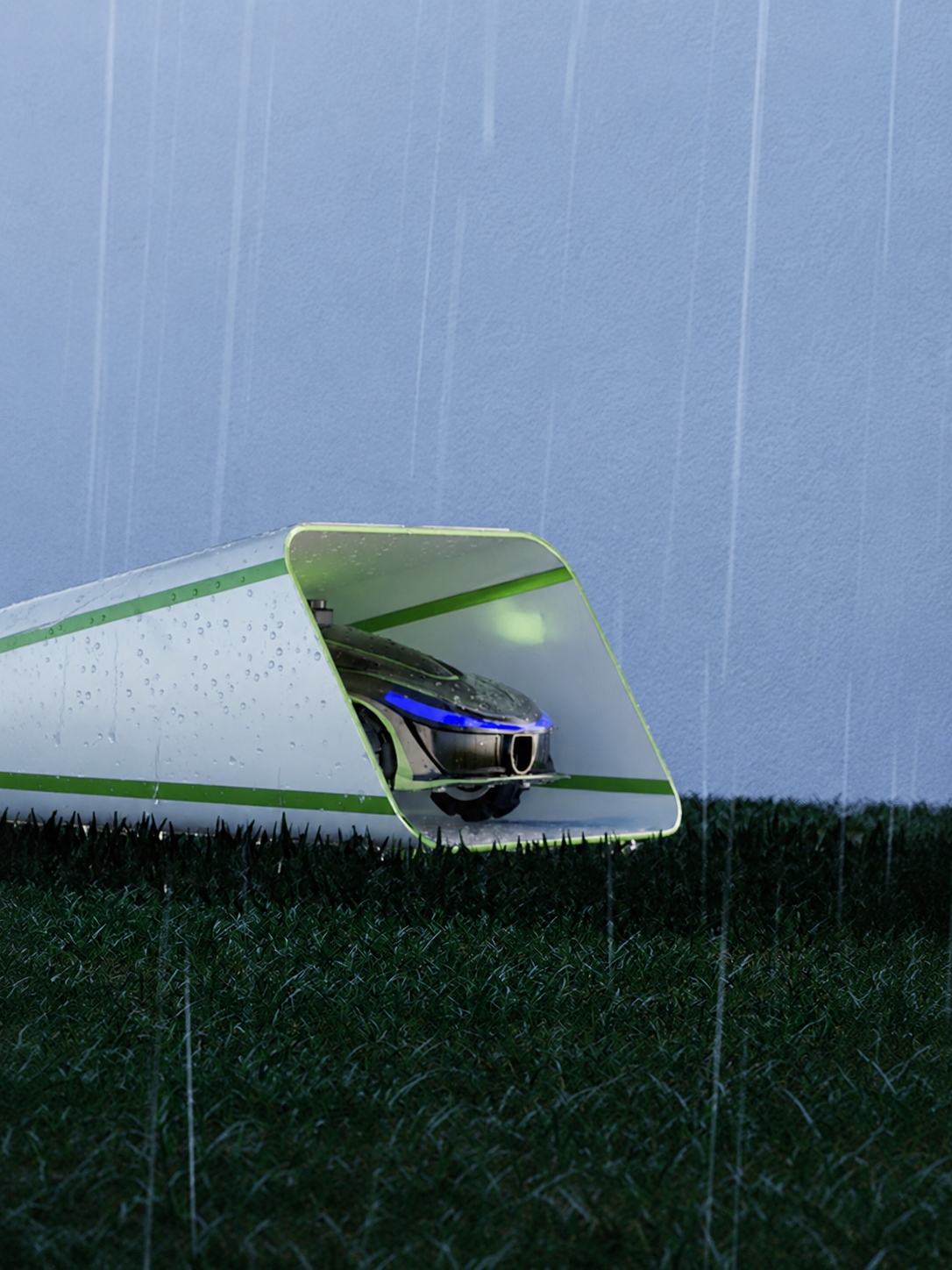
RECHARGING
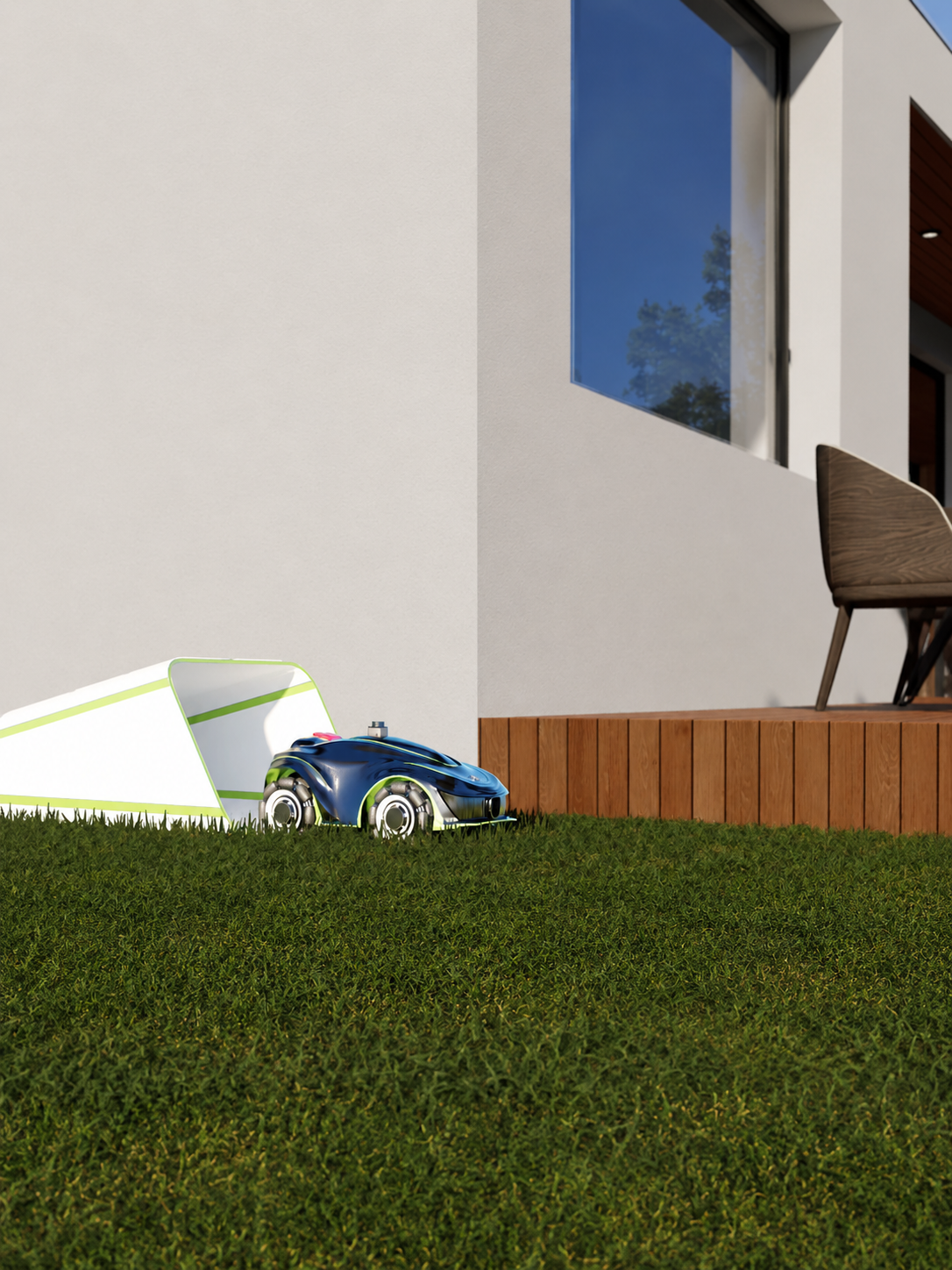
CONDITIONS CLEAR
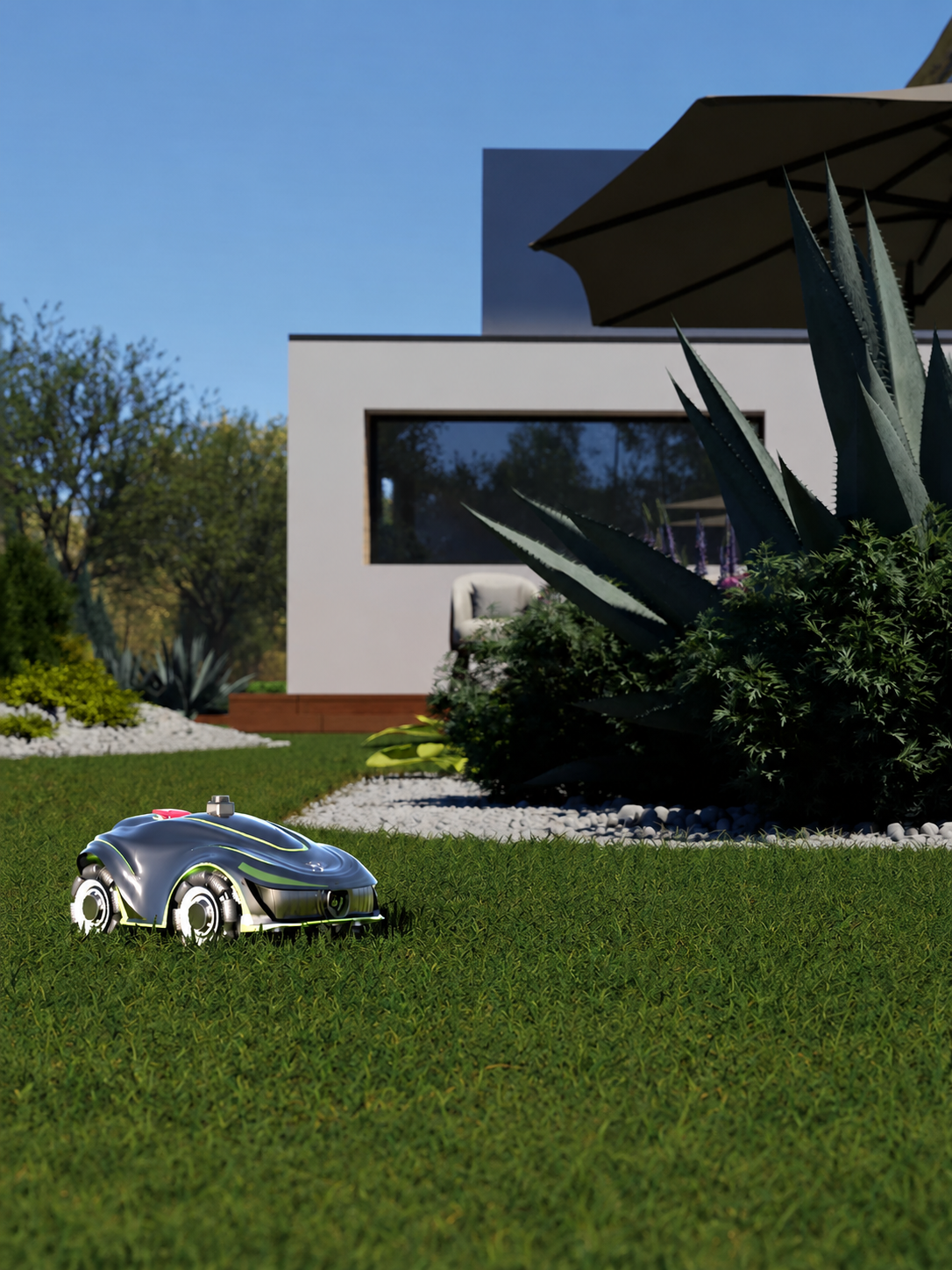
RESUMING MISSION
Automatic rain response means GreenBeam protects itself and the equipment without requiring any intervention — and picks up where it left off when conditions improve.
09 / The hard part
Where the weeding actually happens.
Turf is the easy half. The weeding that takes your Saturday is in the beds, in among the hostas and the mulch, where nothing can be sprayed and nothing has ever been automated.
This is the environment GreenBeam is built for. Plants at close spacing, mulch underfoot, cover overhead. Vision and LiDAR carry the navigation where the sky view thins out, and every plant still gets evaluated on its own.
Evaluating each plant
Close-spaced planting
Mulch surface
Reduced sky view
Plant-level decisions
•
A sprayer cannot make this decision. It applies one chemistry to everything it touches, which is why it stops at the bed line and why this work is still done by hand.